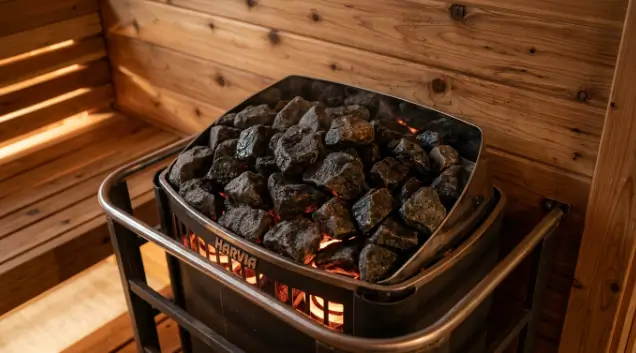
The five most common mistakes buyers make are sizing by floor space instead of cubic footage, ignoring the electrical requirement until after the heater arrives, skipping the clearance and guard rail specs, buying on sticker price alone, and overlooking warranty length. Each one is avoidable with about ten extra minutes of research before ordering. Together they explain most of the horror stories about a sauna heater that never quite holds temperature or fails inside two years.
Mistake 1: Sizing by Floor Space Instead of Cubic Footage
Heater capacity should track cubic footage, not square footage, because a cabin with a tall ceiling or a large glass wall loses heat faster and needs more kilowatts than a low, tightly sealed box with the identical floor plan. A commonly used starting point is about one kilowatt per 45 to 60 cubic feet in a well-insulated cabin, though every manufacturer publishes its own sizing chart. Buyers who size off floor space alone regularly end up with a heater that runs constantly and still falls short of target temperature, which shortens the heater’s working life while delivering a worse session.
Mistake 2: Ignoring the Electrical Requirement Until After Ordering
Most heaters above roughly 4.5kW need a dedicated 240-volt circuit, not a shared household outlet, and that circuit is a real line item that has nothing to do with the sticker price of the heater. Running new wire from the panel can cost anywhere from a few hundred dollars for a short, easy run to well over a thousand for a longer distance or a panel that needs upgrading first. Getting a quote from an electrician before ordering, not after the heater shows up in a box, avoids the scenario where a heater sits unused for weeks waiting on electrical work nobody budgeted for.
Mistake 3: Skipping Clearance and Guard Rail Specs
Every heater ships with a printed clearance chart showing the minimum distance required from combustible walls and benches, and that number changes depending on whether an approved guard rail or heat shield is installed. Buyers who don’t check this before ordering sometimes discover the heater simply doesn’t fit the corner they planned for, or that it fits but violates the clearance the manufacturer requires for safe operation. This is especially common in small cabins where every inch matters, and it’s a five-minute check against the product page that saves a return shipment.
Mistake 4: Buying on Price Alone
A heater priced well below comparable models from established brands is usually cutting corners somewhere, whether that’s thinner steel in the housing, a shorter-rated heating element, or a lower stone capacity than a comparable unit. Sticker price alone doesn’t tell a buyer much without also checking the stated wattage, stone capacity, and what the warranty actually covers. Comparing two or three heaters at similar price points side by side, model spec against model spec, usually reveals which one is genuinely a better deal and which one is just cheaper.
Mistake 5: Overlooking Warranty Length
Look for at least two years on the heating element itself, with five or more years common among established brands selling into the residential market. A warranty under two years, or one that isn’t clearly stated on the product page at all, tends to correlate with a lower-quality import unit that the seller doesn’t expect to last. This is one of the fastest checks a buyer can do, and it’s also one of the most commonly skipped, probably because warranty terms are buried lower on a product page than price and photos.
What Does the Research Say About Long-Term Sauna Use?
None of this is only about avoiding a bad purchase, since the case for buying a heater that actually lasts connects to using it consistently over years, not months. A large Finnish cohort study found men who used a sauna four to seven times weekly had lower rates of fatal cardiovascular events than men who used one once weekly, an association that held after adjusting for other risk factors. A 2018 review in The American Journal of Medicine covered both the benefits and the documented risks of regular sauna bathing. These are population-level associations, not proof for any one individual, and a heater that fails after eighteen months obviously can’t deliver years of consistent use either way.
How to Avoid All Five Mistakes at Once
Working through these five checks together, cubic footage, electrical quote, clearance chart, spec comparison, and warranty length, takes maybe fifteen minutes total against a product page and a phone call to an electrician, which is a small amount of time compared with the cost of getting any one of them wrong after the heater is installed. Keeping a simple checklist while comparing two or three finalist models makes the process faster the second and third time through, since most of the information lives in the same few spots on every manufacturer’s product page. Buyers who treat this like buying a major appliance, checking specs and reviews rather than just clicking the first result, consistently end up happier with the purchase a year or two later than buyers who decide primarily on price and photos.
Comparing published specs side by side before buying is the single best way to avoid all five mistakes at once. Retailers list wattage, stone capacity, clearance, and warranty terms by model, and shoppers researching a compact 6kW package can check the numbers directly at SweatDecks.com before finalizing an order.
Frequently Asked Questions
What is the most common mistake when sizing a sauna heater? Sizing by floor space instead of cubic footage. A cabin with a tall ceiling or large glass panel needs a bigger heater than a low, tight room with the same square footage.
Why do people get surprised by sauna heater installation costs? Most heaters above roughly 4.5kW need a dedicated 240-volt circuit, and buyers often price the heater without getting an electrical quote first. That circuit can cost several hundred to well over a thousand dollars.
Does a cheaper sauna heater actually save money? Not usually. A heater with a vague or short warranty and unlisted stone capacity tends to fail sooner, and replacing it often costs more than buying a better unit initially.
How long should a sauna heater warranty be? Look for at least two years on the heating element, with five or more years common among established brands. Anything shorter, or unstated, is worth treating as a red flag.
References
- Benefits and risks of sauna bathing, The American Journal of Medicine, 2001
- Does the Combination of Finnish Sauna Bathing and Other Lifestyle Factors Confer Additional Health Benefits? A Review of the Evidence, Mayo Clinic Proceedings, 2023
- Effects of heat and cold on health, with special reference to Finnish sauna bathing, American Journal of Physiology – Regulatory, Integrative and Comparative Physiology, 2018
By Lauren Kowalski